
The over at Galle that lasted longer than its six balls
The 60th over of Sri Lanka's fourth-innings chase on Wednesday, 19 August 2026 is the kind of moment that gets compressed into a meme by the close of play. Yashasvi Jaiswal, fielding at square leg, started the over by urging Niroshan Dickwella to take on the Indian bowling. He pointed toward deep square leg and asked for a six. Dickwella, on 4 at the start of the over and hunting quick runs in a chase of 372, replied with a player-to-player shrug: "No requirement. Take me (to) IPL, then I'll hit." Jaiswal came back instantly. "We will, we will. 100%. Come on, hit him a six, I'll take you to the IPL." Dickwella, smiling, said "thank you." Then, on the final ball of the same over, he backed away to slash, edged, and was caught behind by Rishabh Pant for 10.
The dismissals columns and the bowler's figures tell you that Jaiswal won the exchange. The footage tells you the same. What neither column tells you is what the exchange says about the modern wicketkeeper-batter role, which is the bit the Players desk is built to read.
Reading Dickwella's role in 2026
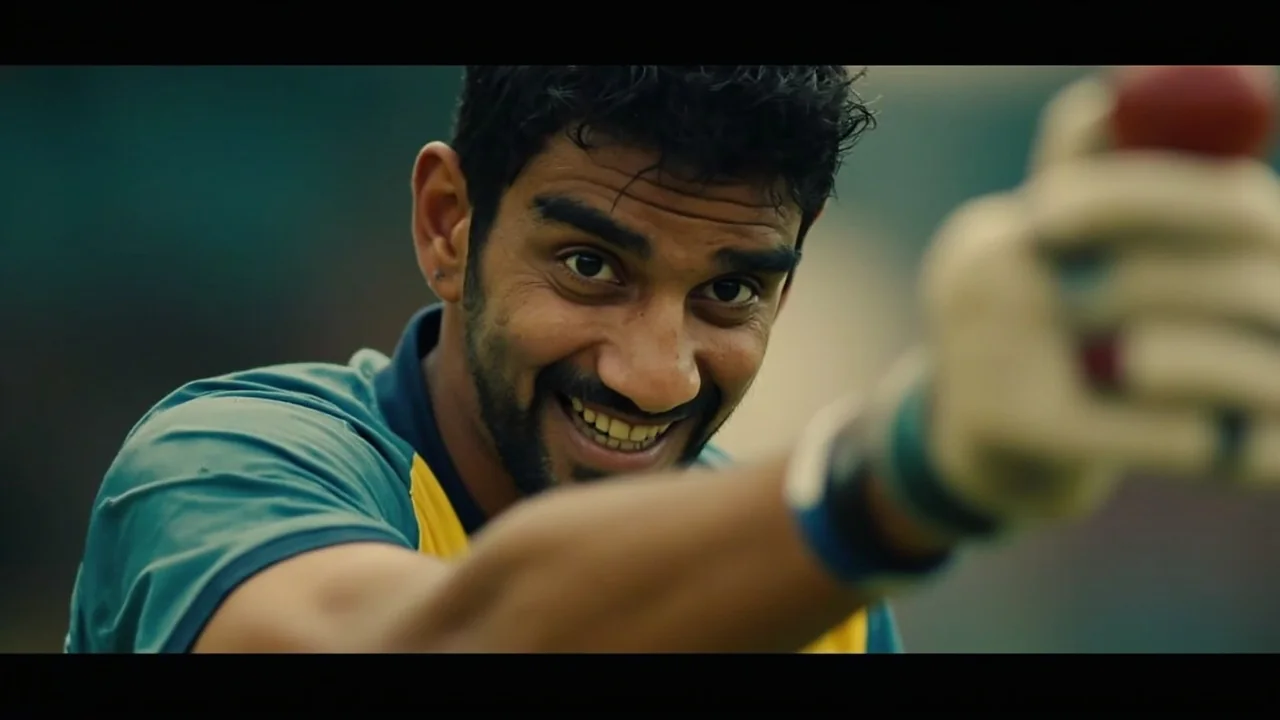
Dickwella is, by trade, a left-handed wicketkeeper-batter who bats in the middle order. In the limited-overs formats he plays the role that the desk calls a "keeper-batter with a powerplay licence": he keeps wickets, fields hard in the cordon, and bats at a strike rate that buys Sri Lanka quick runs against spin in the middle overs. In Tests he sits lower in the order and plays the role that the desk calls "lower-order counter-puncher with a glove": he keeps wickets, and when the ball gets old and the field spreads, his job is to attack the bowler rather than absorb the bowler. The IPL promise was a request for him to do exactly that job on demand, in the middle of a fourth-innings chase.
Per Live Mint's scorecard detail that travelled with the Times of India / ANI report, Dickwella's wait for a Test century has now extended across 98 innings and 55 Tests. That is the wider fact the joke about an IPL contract is sitting on top of. A wicketkeeper-batter who has spent a decade-and-a-half's worth of senior cricket without a Test hundred has, by definition, a role that is not centred on big innings. The role is centred on quick runs, sharp glovework, and the capacity to turn a flat middle session into one or two over-pitched balls that get hit to the fence.
Reading Jaiswal's role from the square-leg end
Yashasvi Jaiswal is the role archetype the desk calls a "powerplay top-order batter who moonlights as a fielder". In IPL terms, that means he bats in the top three for his franchise, plays spin in the powerplay, and uses the early overs to either put his side ahead of the rate or to give his middle order the platform to bat with freedom. At square leg in a Test match, the same instincts show up as a fielder who reads the game, sets the tone with the ball, and uses his platform (a confirmed Test batter talking to a lower-order counter-puncher) to dictate the conversation. He did all three in the same over.
The desk's read on Jaiswal has not changed across the last twelve months. He is a role player whose role is stable. In fantasy terms that translates into a captain pick who pays off when his role is the role the venue rewards, and who loses value when the venue punishes the top-order. The Galle over did not change that read. It underlined it: when Jaiswal is on a field, the conversation between players carries his role-read into it, regardless of whether he is batting or fielding.
What the IPL promise actually shows
Three things, all relevant to a fantasy reader.
The first is the most obvious. A keeper-batter's Test batting role is built around quick runs and a low ceiling. The Galle over is the cleanest case study of what that role looks like under pressure: Dickwella's plan was to attack, his bat did not connect, and his Test match ended in the same over. The fantasy lesson is that a keeper-batter in a Test is almost never a captain pick. The captain pick sits in the top six, with the ball still hard and the field still up. The keeper-batter is the vice-captain pick when the venue rewards quick runs in the middle overs.
The second is more interesting. The IPL promise is the only piece of public evidence in the exchange that names a salary-cap market. It tells fantasy readers that the keeper-batter role is read differently in different formats. In Tests the role is "absorb and counter-punch"; in T20 leagues the role is "open the powerplay or close the death overs and hit boundaries". A keeper-batter who can do both is rare. A keeper-batter who can do one well and the other passably is the fantasy ceiling for the role. The desk keeps a wicketkeeper value table for that reason, and the value table separates the players who can do both from the players who can only do one.
The third is the one that tends to get lost in the framing. The exchange between Jaiswal and Dickwella was conducted in English, in public, on a Test match field, with a stump mic that was almost certainly picking up every word. Both players knew the conversation would travel. Both players chose to keep having it. That is, by itself, a read on how senior Indian and Sri Lankan players view the IPL as a shared market. For fantasy readers, the relevant version of that read is that the keeper-batter salary-cap market is now a single conversation across formats, not three separate ones.

The Test century wait, in plain numbers
Per Live Mint's number, Dickwella's Test century wait has stretched to 98 innings and 55 Tests. The number is verifiable from the broadcaster's scorecard; it is not in dispute. The way the number should be read, however, is the part the Players desk wants to flag.
A keeper-batter's Test century wait is not the same as a top-order batter's century wait. A top-order batter who has played 55 Tests without a hundred is in a different career conversation to a keeper-batter who has played the same number. The keeper-batter's wait includes innings where the role was to bat at number eight, get the new ball, and survive six balls so the number eleven could bat. Reading the wait as if it were a top-order wait leads fantasy readers to under-rate role players whose value sits in the lower-middle order, and to over-rate role players whose value sits in the top three. The Galle over is a useful case study in the first error.
The desk's read, based on the scoreboard numbers in the source report, is straightforward. Dickwella's batting role in this match was lower-middle order. He was on 4 at the start of the over that defined the day. He was given out for 10 at the end of it. The fantasy line is that this is the kind of innings a keeper-batter is paid for: ten runs, a dismissal that swings a Test match, a role that does not require a century to be valuable. The Test century wait is a record of the absence of a particular innings, not a verdict on the player's career.
What fantasy readers take away from the exchange
The cleanest lesson from the Jaiswal-Dickwella exchange is that role and role-read are not the same thing. A keeper-batter's role is fixed by the team sheet. The role-read is what the fantasy desk builds, the work that goes into the captain pick and the vice-captain pick, and the work that turns a Test innings into a fantasy line. The exchange at Galle did not change either for either player. It confirmed what each player is, and what each player's role-read should be.
The two practical signals worth keeping in mind are these. First, on a Test track where the keeper-batter is the lower-middle-order counter-puncher, the keeper-batter is not a captain pick. He is a vice-captain pick, at best, and only when the role-read is that the match will reward quick runs in the middle overs. Second, when a Test chase passes the 250-run mark with wickets still in hand, the keeper-batter's role-read changes from counter-punch to absorb-and-finish. That change happens quickly, and it is the change that decides whether a Test century is on the cards for a keeper-batter or whether the wait extends another innings.
For fantasy readers who track Jaiswal and Dickwella across formats, the practical upshot is that the Galle exchange is not a story about a Test dismissal. It is a story about how a single Test dismissal exposes the role-read of two senior players in two formats at once. The captain pick on a flat T20 deck looks one way; the captain pick on a turning Test track looks another; and the captain pick on a Test chase where the lower-middle order has to counter-punch looks a third. The Players desk tracks all three reads. The Galle over was a reminder that the players themselves are doing the same.
Match state at lunch on day five
For readers who want the match context: Sri Lanka went to lunch on day five at 175 for six in the fourth innings, chasing 372 to win at Galle International Stadium. Keshara Nuwantha was unbeaten on 8 and Sonal Dinusha on 65. India needed four more wickets to win the opening Test of the two-match series. Earlier in the session, Ravindra Jadeja had dismissed Sri Lanka captain Dhananjaya de Silva for 59 to break what had been a stubborn resistance. Those are the numbers from the source report; everything else in this retrospective has been built on the same source.
What we could not verify
The Players desk could not verify any IPL franchise interest in Dickwella specifically. The IPL promise was a Test-match joke between two players, not a contract offer from any franchise. Readers who want to confirm franchise-level interest in a player should check the operator's preferred cricket feed, the franchise's official social channels, and the league's own auction lists, in that order. The desk does not speculate on auction values or franchise interest on the basis of an on-field joke.
The source, the report and the broadcast
This retrospective is built on the 19 August 2026 Times of India / ANI report carried by Yahoo Sports, sourced from the Live Mint scorecard note attached to the same report. The report covers the Jaiswal-Dickwella exchange at the 60th over of Sri Lanka's fourth-innings chase at the Galle International Stadium, the dismissal of Dickwella on the final ball of that over for 10, the dismissal of Dhananjaya de Silva for 59 earlier in the session, the lunch score of 175 for six, and the Test-century-wait figure of 98 innings and 55 Tests attributed to Live Mint. No additional statistical claims, head-to-head numbers or off-field rumours have been added. Where a claim could not be traced back to the Times of India / ANI report or the Live Mint note, it has been left out.
Related reading from the desk
Readers who want to put the keeper-batter role-read into practice this match week will find the desk's Players guide useful: it walks through the role archetypes, the captain multiplier, the venue-and-form framework, and the way the wicketkeeper-batter role is treated across T20, ODI and TEST formats. The match previews carry the same five-signal method on a daily basis, and the points system reference is the cleanest way to confirm how a wicketkeeper's catching and stumping points convert into fantasy points in each format.